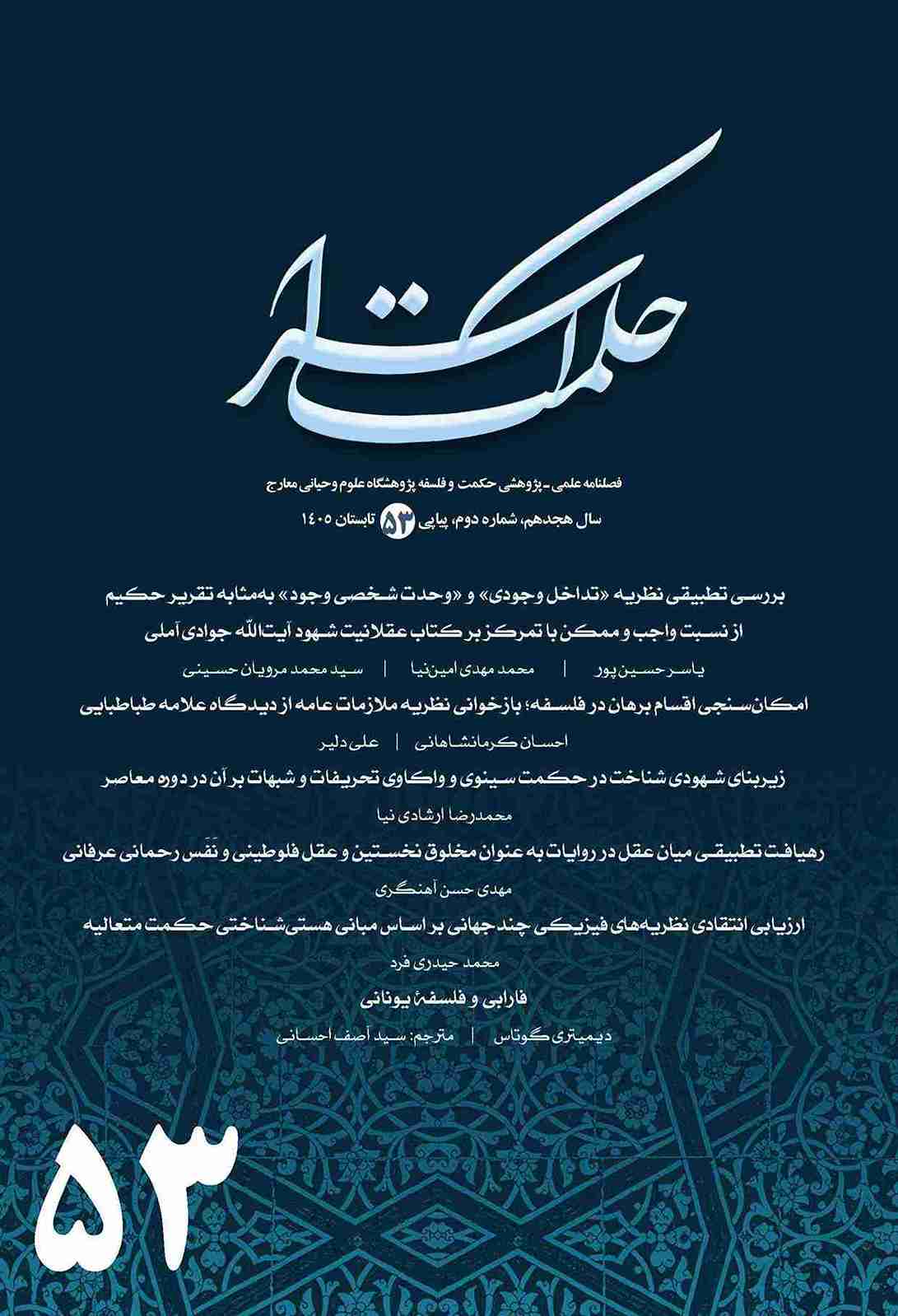
فصلنامه حکمت اسرا

فصلنامه حکمت اسرا

امکان‌سنجی اقسام برهان در فلسفه؛ بازخوانی نظریه ملازمات عامه در دیدگاه علامه طباطبایی

نوع مقاله : مقاله پژوهشی

نویسندگان
1 پژوهشگر و استاد سطوح عالی حوزه علمیه قم
2 دانشجوی دکتری فلسفه اسلامی دانشگاه ترتیت مدرس و طلبه سطح چهار حوزه
10.22034/hi.2026.585923.2162
چکیده
مسئله‌ی «اقسام برهان» و امکان‌سنجیِ جریانِ آن‌ها در فلسفه، از مباحث اساسی در فلسفه به‌ویژه حکمت متعالیه است. محورِاصلیِ این نوشتار، واکاویِ دیدگاه علامه طباطبایی مبنی بر«حصرِ طریقِ برهانِ فلسفی در برهانِ إنّی از طریقِ ملازماتِ عامه» و نقد آن توسط شاگردان و شارحان معاصر است.علامه با تکیه بر قاعده «ذوات الأسباب لاتعرف إلا بأسبابها» از یک‌سو، وتبیین دقیقِ «موضوع فلسفه» و «تساویِ عوارضِ ذاتی با آن» از سوی دیگر،به‌ترتیب جریانِ برهانِ إنی بر اساس تلازم خاص و برهان لمّی را در مسائلِ فلسفی ممتنع می‌شمارد؛ زیرا از یک‌سو، سیرِ از معلول به علت به‌دلیلِ استحاله، یقین‌آور نیست، و از سوی‌ دیگر، «موجود بما هو موجود» فاقدِ علتِ خارجی است. در مقابل، ناقدان از سویی، با تبیین‌هایی نظیر «خلط مقام اثبات و ثبوت» و «امکان برهان إنی از راه علم حضوری»، برهان إنی را مفید یقین می‌دانند و با تبیین‌هایی مانند «علیتِ تحلیلیِ مفهومی»، «علیت مرتبه‌ای از وجود برای مرتبه دیگر»، «بازگشت برهان ملازمات عامه به برهان لمّی» و نیز «جریان برهان لمّی در الهیات به‌معنای اخص» و با پذیرشِ «عرضیِ ذاتیِ اخص»، در پی اثبات جریان برهانِ لمّی در فلسفه برآمده‌اند. این نوشته با تحلیلِ انتقادیِ آرایِ این ناقدان، نشان می‌دهد که این نقدها به‌ویژه علیت تحلیلی و تمسک به تمایز معنا از مفهوم و مصداق ناشی از عدم دریافت صحیح کلام علامه طباطبایی است و یا بر مبانی خاصی استوار است که موردپذیرش علامه نیست، و از این‌رو، نقد‌هایی مبنایی است. در نهایت، دیدگاه علامه طباطبایی همچنان به‌عنوانِ خوانشی منسجم و استوار بر مبانیِ اصیل فلسفی حفظ می‌گردد.
کلیدواژه‌ها
موضوعات

عنوان مقاله English

The Feasibility of the Types of Proof in Philosophy: A Rereading of the Theory of General Concomitances from Allameh Tabataba'i’s Perspective

نویسندگان English

Ehsan Kermanshahani 1
Ali Dalir 2
1 professor of Islamic Philosophy in Qom seminary
2 PhD student in Islamic Philosophy and Level 4 Student at the Islamic Seminary of Qom
چکیده English

The "types of proof" and their applicability in philosophy constitute a fundamental debate, particularly within Transcendent Philosophy. This paper critically analyzes Allameh Tabataba'i's restriction of philosophical proof to inni (a posteriori) proof via general concomitances, alongside its critiques by contemporary commentators. Relying on the principle "that which possesses a cause is known only through its cause" and the definition of philosophy's subject matter, Allameh deems both inni proof based on specific concomitance and limmi (a priori) proof impossible in resolving philosophical problems. He argues that proceeding from effect to cause fails to yield certitude, and "existence qua existence" lacks an external cause. Conversely, critics assert that inni proof yields certitude, citing the conflation between the realms of assertion (ithbat) and reality (thubut), or proposing inni proof via knowledge by presence. Furthermore, through frameworks like "conceptual-analytical causality," "inter-level existential causality," "the reduction of general concomitances to limmi proof," and its application in theology proper—while accepting "narrower essential accidents"—they attempt to validate limmi proof in philosophy. Through a critical analysis, this study demonstrates that these critiques either misinterpret Allameh's thesis or rely on foundational premises he rejects, rendering them foundational disagreements. Ultimately, Allameh Tabataba'i’s position is defended as a highly coherent reading firmly grounded in authentic philosophical principles

کلیدواژه‌ها English

Inni Proof, Limmi Proof, Certitude, Allameh Tabataba'
i, General Concomitances. Analytical causality

مقالات آماده انتشار، پذیرفته شده
انتشار آنلاین از 20 شهریور 1405