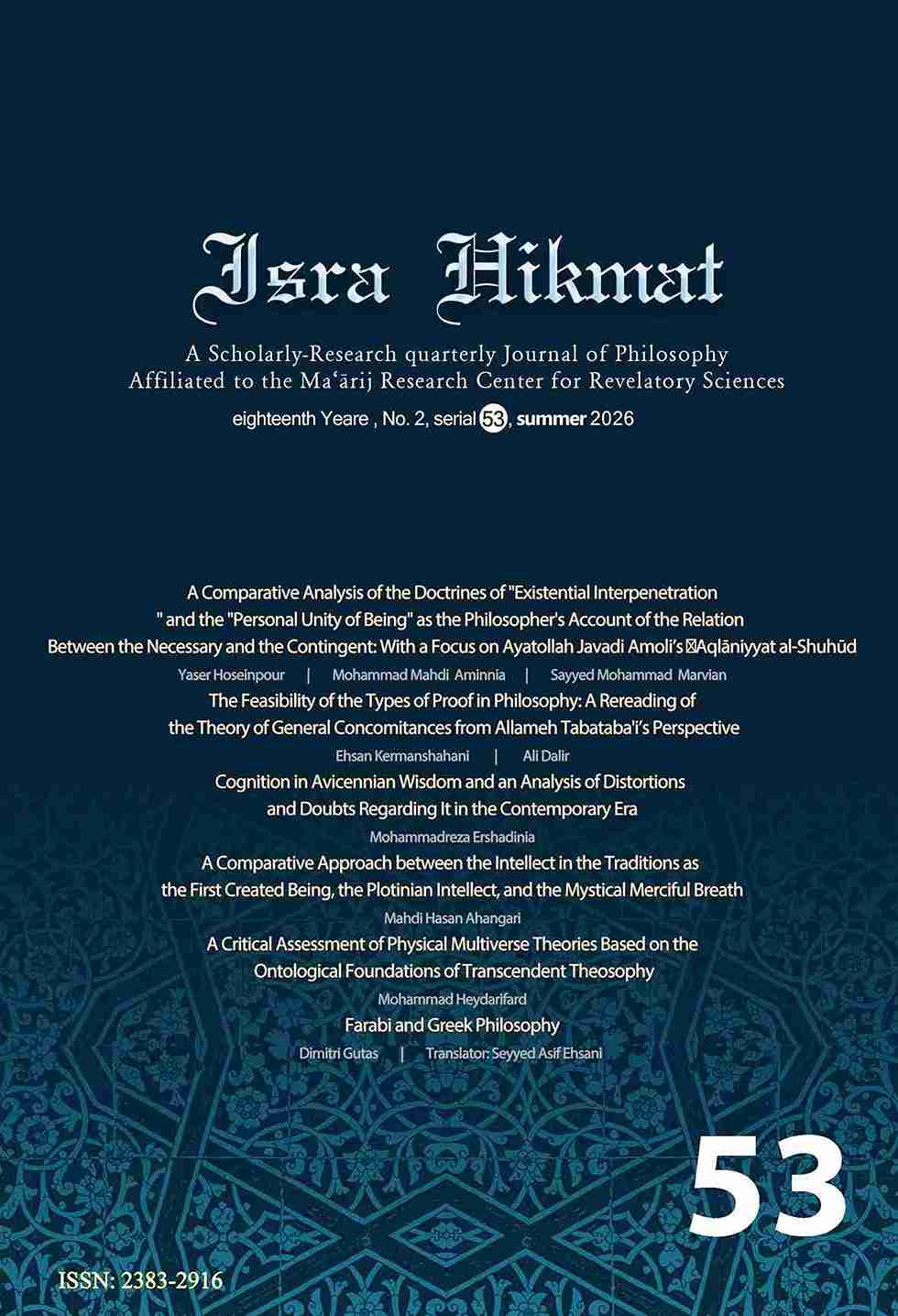
Isra Hikmat

Isra Hikmat

The Feasibility of the Types of Proof in Philosophy: A Rereading of the Theory of General Concomitances from Allameh Tabataba'i’s Perspective

Document Type : Research Paper

Authors
1 professor of Islamic Philosophy in Qom seminary
2 PhD student in Islamic Philosophy and Level 4 Student at the Islamic Seminary of Qom
10.22034/hi.2026.585923.2162
Abstract
The "types of proof" and their applicability in philosophy constitute a fundamental debate, particularly within Transcendent Philosophy. This paper critically analyzes Allameh Tabataba'i's restriction of philosophical proof to inni (a posteriori) proof via general concomitances, alongside its critiques by contemporary commentators. Relying on the principle "that which possesses a cause is known only through its cause" and the definition of philosophy's subject matter, Allameh deems both inni proof based on specific concomitance and limmi (a priori) proof impossible in resolving philosophical problems. He argues that proceeding from effect to cause fails to yield certitude, and "existence qua existence" lacks an external cause. Conversely, critics assert that inni proof yields certitude, citing the conflation between the realms of assertion (ithbat) and reality (thubut), or proposing inni proof via knowledge by presence. Furthermore, through frameworks like "conceptual-analytical causality," "inter-level existential causality," "the reduction of general concomitances to limmi proof," and its application in theology proper—while accepting "narrower essential accidents"—they attempt to validate limmi proof in philosophy. Through a critical analysis, this study demonstrates that these critiques either misinterpret Allameh's thesis or rely on foundational premises he rejects, rendering them foundational disagreements. Ultimately, Allameh Tabataba'i’s position is defended as a highly coherent reading firmly grounded in authentic philosophical principles
Keywords
Subjects

ابن‌سینا (1404ق)، الشفاء، ج3، بخش برهان، قم، منشورات مکتبة آیت‌الله مرعشی نجفی.
بلند‌قامت، زهیر و فیاضی، غلامرضا (1396)، ادله اثبات علیت تحلیلی، معرفت فلسفی، سال چهاردهم، ش 4.
جوادی‌آملی، عبدالله (1375)، رحیق مختوم، ج1و2، قم، مرکز نشر اسراء.
جوادی‌آملی، عبدالله (1372)، شرح حکمت متعالیه، ج 1 و 2، قم، انتشارات الزهرا.
جوادی‌آملی، عبدالله (1386)، شمس الوحی تبریزی، قم، مرکز نشر اسراء.
طباطبایی، سید محمدحسین (1403)، تعلیقات علی الأسفار، تحقیق احسان کرمانشاهانی، قم: نشر ذکری.
طباطبایی، سید محمد‌حسین (1428ق) مجموعه رسائل العلامه الطباطبایی، قم، باقیات.
طباطبایی، سید محمدحسین، ( 1416ق)، نهایه الحکمه، قم، جماعه المدرسین فی الحوزه العلمیه.
عشاقی اصفهانی، حسین (1382)، وعایة الحکمة فی شرح نهایة الحکمة، قم، المرکز العالمی للدراسات الاسلامیة.
فیاضی، غلامرضا (1378)، نهایة الحکمة، قم، موسسه امام خمینی (ره)
فیاضی، غلامرضا (1388)، هستی و چیستی در مکتب صدرایی، قم، پژوهشگاه حوزه و دانشگاه.
مصباح‌یزدی، محمد‌تقی (1405ق)، تعلیقة علی نهایة الحکمة، قم، موسسه در راه حق.
یزدان‌پناه، سید یدالله (1396)، تأملاتی در فلسفه فلسفه اسلامی، قم: کتاب فردا.
وکیلی، علی و کاوندی، سحر (1402)، سیر برهانی ازطریق ملازمات عامه در فلسفه از منظر علامه طباطبایی، جستارهایی در فلسفه و کلام، بهار و تابستان 1402، ص157-172.
بهلول‌زاده، قاسم (1401)، تبیین مبانی نظریه حصر روشی فلسفه در برهان إن به تلازم عام و نقد آرای مخالف، نسیم خرد، سال هشتم، شماره اول.
معلمی، حسن و نوری، محمدعلی (1394)، اعم بودن علیّت حد وسط در برهان لمّ از خارجی و تحلیلی و پیامد آن، آیین حکمت، سال هفتم، شماره 26.
سلیمانی‌امیری، عسکری (1402)، نقد بررسی انحصاری بودن برهان إنی مطلق از ملازمات عامه در فلسفه از منظر علامه طباطبایی، حکمت اسلامی، سال دهم، شماره چهارم.
امیری‌سلیمانی، عسکری (1386)، قاعده ذوات‌ الأسباب در منطق در یک نگاه، معرفت فلسفی، سال پنجم، شماره 2، ص163-188.
موسوی‌اعظم، سیدمصطفی (1395)، کارکردهای علیت تحلیلی دربرهان، معرفت فلسفی، سال چهاردهم، شماره دوم، ص73-94.