. Assistant Professor of Islamic Research Institute for Culture and Thought, Qom, Iran.
Abstract
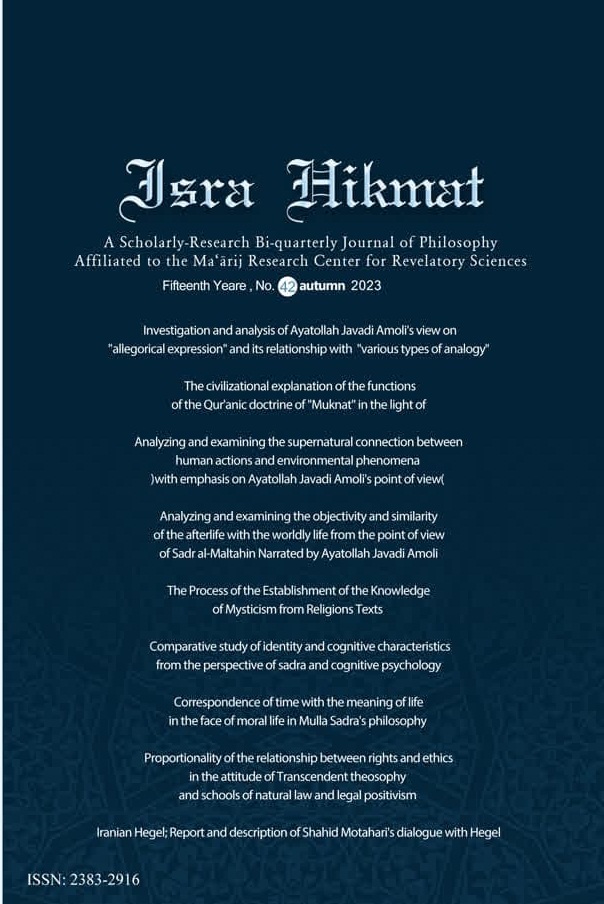
How did mysticism arise from books and traditions and become theoretical and practical knowledge in one structure? This is a question that needs to be answered by analyzing religion from a mystical point of view. From this point of view, religion has three areas of sharia, tariqat and truth, which have many interpretations, the most famous of which is the interpretation of Saeeduddin Ferghani and his followers. In this interpretation of the Sharia, they belong to obligatory rulings, tariqat to the details of the religious practice, and truth to the monotheistic truths, and just as fiqh al-Ahkam is needed to achieve the purposes of the Sharia, in order to achieve the purposes of the tariqat, the jurisprudence of al-Qulb and al-Suluk and the purposes of truth are needed to fiqh al-ma'arif. Just as al-Ahkam jurisprudence needs a mandatory understanding, al-Saluk jurisprudence also needs a logical understanding and al-Maarif jurisprudence needs an intuitive understanding. On the basis of Seluki understandings of the field of Tariqat, which is the result of Seluki ijtihad, the mystics started the Seluki experience; So, based on intuitive understandings of the realm of truth, which is the result of intuitive ijtihad, they embarked on a mystical experience. After this action, they described, explained, interpreted and consolidated those experiences with reason, which is the result of the consolidation of Seleucid propositions of the knowledge of practical mysticism, and the result of the consolidation of intuitive propositions of the knowledge of theoretical mysticism.
سید رضی، (1384)، نهج البلاغه، ترجمۀ سید جعفر شهیدی، تهران، شرکت انتشارات علمی فرهنگی.
آملی، سید حیدر، (1368)، جامع الاسرار و منبع الانوار، تصحیحات هنری کربن و عثمان اسماعیل یحیی، تهران، تهران، انجمن ایرانشناسی فرانسه و شرکت انتشارات علمی و فرهنگی..
ـــــــــــــ ، (1414)، المحیط الاعظم و البحر الخضم، تهران، تحقیق و تقدیم و تعلیق سید محسن موسوی تبریزی، وزرات فرهنگ و ارشاد اسلامی.
ـــــــــــــ ، (1382)، اسرار الشریعه و انوار الحقیقه و اطوار الطریقه، تحقیق و تقدیم و تعلیق سید محسن موسوی تبریزی، قم، نور علی نور.
ابن سینا، (1363)، الهیات شفاء، تصحیح و تقدیم ابراهیم مدکور، تهران، انتشارات ناصر خسرو.
ابن عربی، محیی الدین، (بیتا)، الفتوحات المکیه، بیروت، دار احیاء التراث العربی.
ترکه اصفهانی، علی بن محمد، (1387ش)، تمهید القواعد. تقدیم و تصحیح سید جلالالدین آشتیانی. قم: دفتر تبلیغات حوزۀ علمیه.
ــــــــــــــــــــــــــــ ، (1378 الف)، شرح فصوص الحکم. تحقیق و تعلیق محسن بیدارفر. قم: نشر بیدار.
جامی، عبدالرحمن، (1370) نفحات الانس من حضرات القدس، تحقیق محمود عابدی، تهران: نشر اطلاعات.
سهرودی؛ ابو حفض عمر بن محمد بن عبدالله (1426ق )، عوارف المعارف. ضبط و تصحیح محمد عبدالعزیز خالدی. بیروت: دار الکتب العلمیه.
صدرالدین شیرازی (1419 ق)، (1981م)، الحکمه المتعالیه فی الاسفار العقلیهالاربعه (اسفار )، بیروت: دار احیائ التراث العربی.
طباطبایی، محمد حسین (1393)، المیزان، بیروت، مؤسسه الاعلمی.
طوسی، خواجه نصیرالدین، (1375ش )، شرح الاشارات و التنبیهات. قم: نشر البلاغه.
عبادی، قطب الدین (1368)، صوفی نامه یا التصفیه فی احوال المتصوفه، تصحیح غلامحسین یوسفی، تهران، سخن.
غزالی، ابوحامد، (بی تا)، احیاء علوم الدین. تصحیح عبدالرحیم بن حسین حافظ عراقی، بیروت: دارالکتاب العربی.