1
University of TEHRAN. Faculty of Theology and Islamic Studies. Ph.d Candidate
2
Associate Professor, University of Tehran, Department of History and Islamic Civilization, Tehran, Islamic Republic of Iran.
3
Assistant Professor, University of Tehran, Faculty of Quran and Texts, Tehran, Islamic Republic of Iran. Eshaghian.
Abstract
Aim: To show the civilizational capacity of the teachings of the Holy Quran is one of the scientific goals of choosing this topic. Necessity: Basically, civilization is a human phenomenon that is formed on the basis of collective rationality and wisdom emanating from the field of thought and human sciences of that border and region, which plays a significant role in biasing human relations in that society. If a civilization is formed far from correct rationality, it will cause serious damage to human beings and human relations. A civilization that is formed based on correct rationality will provide the basis for the growth and development of human beings and human relations on a macro level. . According to its theoretical foundations, every civilization has a level of rationality, of course, the model of rationality in every civilization is specific to that civilization and different from other civilizations. It is considered, therefore, to discover and scientifically explain it, it is necessary to carry out such researches. Method: This article, with a descriptive-analytical method on the basis of revealed rationality, seeks to answer the question: What is the civilizational explanation of the functions of the doctrine of " Muknat " in the Qur'an, in the light of revealed rationality? Results: creating a suitable platform for creating unity with the creation of a single identity in the light of revealed rationality, regulating human relations in the light of revealed rationality, consolidating and expanding the famous in the light of revealed rationality.
بابایی، حبیبالله، (1390)، تمدن و تجدد در اندیشۀ معاصر عرب، قم: پژوهشگاه علوم و فرهنگ اسلامی.
ــــــــــــــ ، (1399)، تنوع و تمدن در اندیشه اسلامی، قم: پژوهشگاه علوم و فرهنگ اسلامی.
بننبی، مالک، (1986)، شروط النهضه، قطر: وزارة الثقافه و الفنون و التراث.
بیرو، آلن، (1367)، فرهنگ علوم اجتماعی، ترجمۀ باقر ساروخانی، تهران: کیهان.
پارسانیا، حمید، (1394)، نسبت مفهوم عقل در قرآن و روایات با عقل در فرهنگ و تاریخ اسلام، نشریه معارج، ش 1.
پاکتچی، احمد، (1400)، روششناسی پیوند میان دستگاه مفهومی قرآن کریم و علوم مدرن، تهران: دانشگاه امام صادق7.
کلانتری، عبدالحسین، (1393)، معنا و عقلانیت در آرای علامه طباطبایی و پیتر وینچ، تهران: طه.
گرونبام،
گنجور، مهدی، (1399)، مبانی وجودشناختی توسعه و تعالی علوم بر پایۀ عقلانیت وحیانی با تأکید بر اندیشههای آیتالله جوادیآملی، دوفصلنامه علمی حکمت صدرایی، سال نهم، شمار اول.
جابری، محمد عابد، (1389)، تکوین عقل عربی، ترجمۀ سید محمد آلمهدی، تهران: نسل آفتاب.
ــــــــــــــــــ ، (2000)، تکوین العقل العربی، بیروت: مرکز الدراسات الوحدة العربیة.
جعفری، محمدتقی، (زمستان 1389)، علم و دین در حیات معقول، تهران: موسسه تدوین و نشر آثار علامه جعفری.
جمعی از نویسندگان، (1399)، چیستی تمدن، ترجمه سید محمدحسین صالحی، قم: پژوهشگاه علوم و فرهنگ اسلامی.
جوادیآملی، عبدالله، (1382)، حیات حقیقی انسان در قرآن، قم: اسراء.
ــــــــــــــــــ، (1386)، وحی و نبوت در قرآن، قم: اسراء.
ــــــــــــــــــ، (1389)، تفسیر تسنیم، ج 2، قم: اسراء.
ــــــــــــــــــ، (1389)، تفسیر تسنیم، ج 5، قم: اسراء.
ــــــــــــــــــ، (1386)، تفسیر تسنیم، ج 16، قم: اسراء.
فلاحتفتی، فاطمه، (1401)، مبانی و قواعد فقهی حاکم بر عقلانیت و همگرایی مسلمانان در تمدن نوین اسلامی، دو فصلنامه علمی مطالعات بنیادین تمدن نوین اسلامی، دوره 5، ش 2، صص 155-194.
فراهیدی، خلیلبناحمد، (1414ق)، کتاب العین، ج3، قم: موسسه النشر الاسلامی.
فیومی، احمدبن محمد، (1405ق)، مصباح المنیر، ج2، قم: دار الهجره.
قرشى، على اکبر، (1371)، قاموس قرآن، تهران، چ ششم: دار الکتب الاسلامیه.
مصطفوی، سیدحسن، (1360)، التحقیق فی کلمات القرآن الکریم، ج13، تهران: بنگاه ترجمه و نشر کتاب.
موحد، ضیاء، (1383)، منطق و عقلانیت، مجله مقالات و بررسیها، دفتر 75، دانشگاه تهران.
Nasr, Seyyed Hossein (2009) , “ Civilizational Dialogue and the Islamic World,” In: Al-Idrus Mohamed Ajmal Bin Abdul Razak (Ed.) , Islam Hadhari: Bridging Tradition and Modernity, Kuala Lumpur: International Institute of Islamic Thought and Civilization (ISTAC).
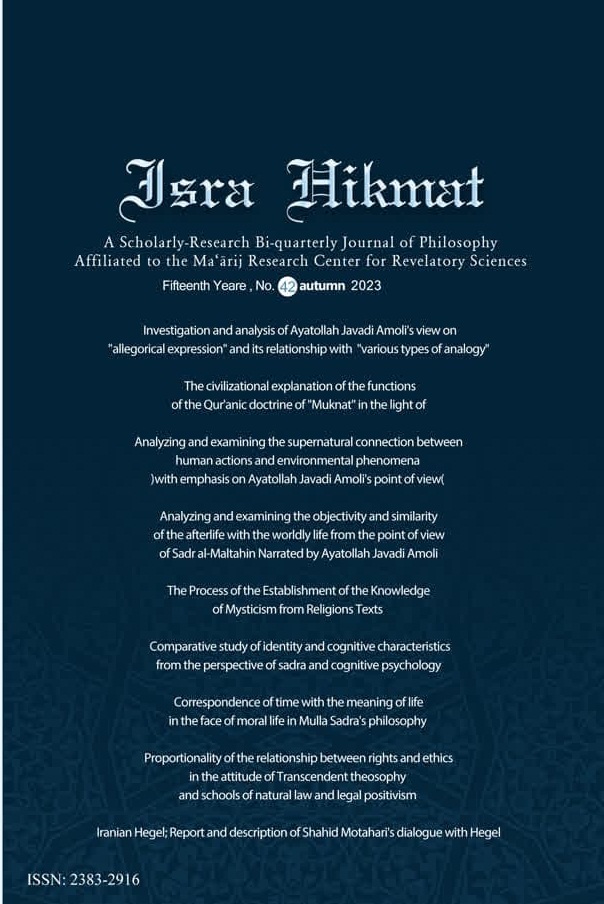
Zare khafri,A. , Nassiri,M. , Rezaei,R. and Ishaqian,J. (2023). The civilizational explanation of the functions of the Qur'anic doctrine of "Moknat" in the light of revealed rationality. Isra Hikmat, 15(2), 31-74.
MLA
Zare khafri,A. , , Nassiri,M. , , Rezaei,R. , and Ishaqian,J. . "The civilizational explanation of the functions of the Qur'anic doctrine of "Moknat" in the light of revealed rationality", Isra Hikmat, 15, 2, 2023, 31-74.
HARVARD
Zare khafri A., Nassiri M., Rezaei R., Ishaqian J. (2023). 'The civilizational explanation of the functions of the Qur'anic doctrine of "Moknat" in the light of revealed rationality', Isra Hikmat, 15(2), pp. 31-74.
CHICAGO
A. Zare khafri, M. Nassiri, R. Rezaei and J. Ishaqian, "The civilizational explanation of the functions of the Qur'anic doctrine of "Moknat" in the light of revealed rationality," Isra Hikmat, 15 2 (2023): 31-74,
VANCOUVER
Zare khafri A., Nassiri M., Rezaei R., Ishaqian J. The civilizational explanation of the functions of the Qur'anic doctrine of "Moknat" in the light of revealed rationality. Isra Hikmat, 2023; 15(2): 31-74.